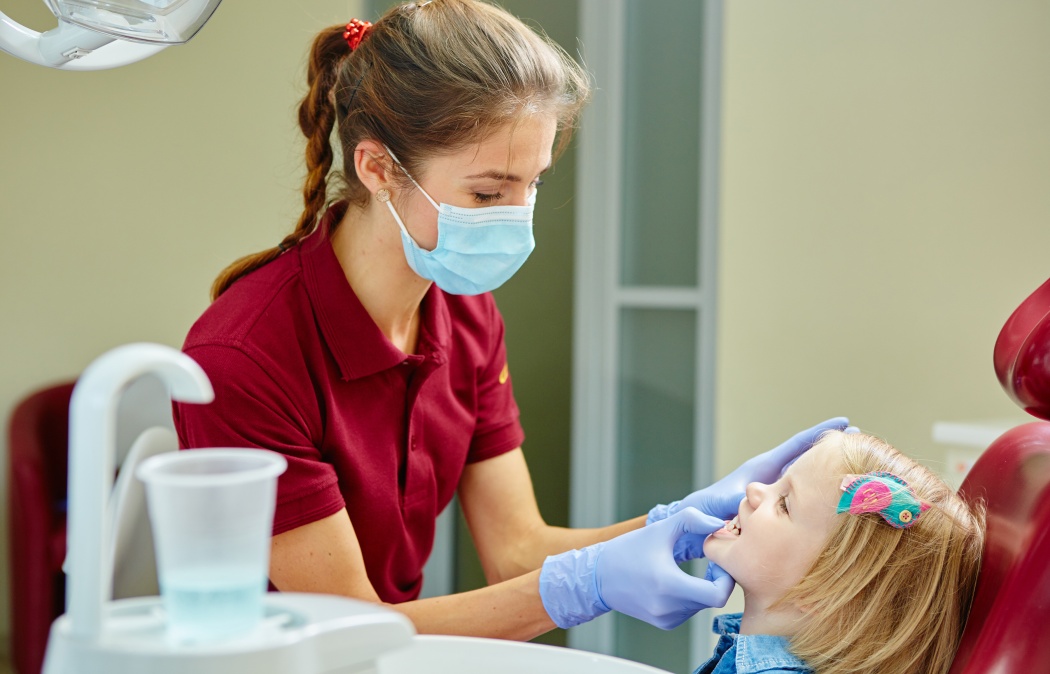
Is Your Child Old Enough for Their First Orthodontic Evaluation? The Answer Might Surprise You
Back-to-school season brings a flurry of appointments — pediatrician, optometrist, maybe a sports physical. Dental checkups make the list for most families. But one appointment that rarely makes it on the radar? An orthodontic evaluation. And for a lot of kids in Butte, that evaluation should have happened a year or two ago.
Here’s the thing: most parents assume orthodontics is a conversation for the teenage years, once all the adult teeth have come in. It’s a reasonable assumption — and it’s one that the American Association of Orthodontists (AAO) directly challenges. Their recommendation is that children receive their first orthodontic screening by age 7. Seven. Not 12, not when permanent teeth are fully erupted. Seven.
At Silver Creek Family Dentistry in Butte, Dr. Tyson Gundersen and Dr. Samantha Gaffney see the full range of dental and orthodontic needs under one roof — which means they can identify early orthodontic concerns during routine checkups and help Montana families plan proactively rather than reactively. Here’s why the timing of that first evaluation matters more than most parents realize.
Why Age 7 Is the Magic Number
At age 7, most children have a mix of primary (baby) and permanent teeth — and that combination is actually ideal for an orthodontic evaluation. The first permanent molars have typically come in, which establishes the “back bite.” The front incisors are often partially or fully erupted. The orthodontist or dentist can see how the bite is developing, how the jaws are growing relative to each other, and whether there are early signs of problems that, if caught now, are significantly easier to address.
This doesn’t mean treatment starts at age 7. Most children who are evaluated early are simply monitored while growth continues, with any needed treatment beginning later at the optimal time. But for children with specific issues — and there are several — early intervention (called interceptive orthodontics) can address problems while the jaw is still growing and bone is still malleable, producing results that aren’t achievable once growth is complete.
The child who gets their first evaluation at 12 and discovers they needed early intervention at 9 has lost the window for the most effective treatment. The child who was evaluated at 7 and monitored appropriately arrives at the ideal treatment window already identified and ready.
What Early Evaluations Can Catch
You don’t need a crystal ball to figure out if your 7-year-old might benefit from an early orthodontic evaluation. There are several signs worth paying attention to in younger children:
- Early or late loss of baby teeth: If primary teeth are falling out significantly earlier or later than typical, the permanent teeth may be affected.
- Crowding or overlapping: When permanent teeth are visibly coming in without enough space, crowding is already present.
- Mouth breathing: Children who consistently breathe through their mouths, especially during sleep, often have developing airway or jaw issues that orthodontic intervention can address.
- Difficulty chewing or biting: If a child favors one side when chewing or has food falling out of their mouth frequently, bite alignment may be the issue.
- Crossbite: When some upper teeth bite inside the lower teeth rather than outside, this is a crossbite — and it’s best addressed during growth, when expansion appliances can guide the developing jaw rather than forcing correction on a completed one.
- Thumb sucking or pacifier use past age 4-5: Extended oral habits can alter the development of the jaw and the position of front teeth in ways that are more easily addressed early than later.
- Protruding front teeth: Kids with significantly prominent upper front teeth are at increased risk of dental trauma from falls and sports contact — and earlier correction reduces that risk.
What Interceptive Treatment Can (and Can’t) Do
Interceptive orthodontics isn’t about giving a 7-year-old a full set of braces. It’s about targeted, time-sensitive interventions during the growth window that guide jaw development, create space for incoming permanent teeth, or address specific bite problems before they become more complex.
Common early interventions include palate expanders (to widen a narrow upper jaw and address crowding before permanent teeth are fully erupted), space maintainers (to hold space open after early primary tooth loss), and habit appliances (to help break thumb-sucking or tongue-thrusting habits that are affecting jaw development).
What interceptive orthodontics doesn’t do is eliminate the need for traditional orthodontic treatment in many cases. Many kids who receive early intervention still go on to have braces or aligners in their teen years. What changes is the complexity — and often the duration — of that treatment. Problems addressed early are problems the final treatment doesn’t have to work as hard to fix.
The Back-to-School Window Is Perfect for Getting Started
August is one of the best times of year to schedule a dental or orthodontic evaluation for a child. Families are already making health appointments, schedules are transitioning back to a more structured routine, and — importantly — if early treatment is recommended, the school-year schedule allows for easier management of brief appointments than summer’s variable calendar.
At Silver Creek Family Dentistry, the full-service approach means children don’t have to be referred across town for an orthodontic assessment. Dr. Gundersen’s honors training in orthodontics at Oregon Health and Science University and the practice’s comprehensive technology — including Cone Beam CT scanning, digital impressions, and in-house 3D printing — allow for thorough orthodontic evaluation as part of the integrated dental care the practice already provides.
ClearCorrect clear aligners and traditional braces are both available for patients who need treatment, making Silver Creek a one-stop destination for Montana families from Butte and beyond.
Schedule Your Child’s Orthodontic Evaluation at Silver Creek Family Dentistry
Silver Creek Family Dentistry is located at 245 East Park Street in Butte, Montana. New patients are always welcome, with convenient Monday through Thursday scheduling and same-day emergency care when life doesn’t cooperate. Call (406) 494-7058 to schedule your child’s evaluation. Back-to-school appointments are filling up fast — don’t let the season go by without checking this one off the list.